October 7, 2026
MSSL Managing Director shares insight on robust specification as BEAMA Chair in Electrotechnical review magazine.
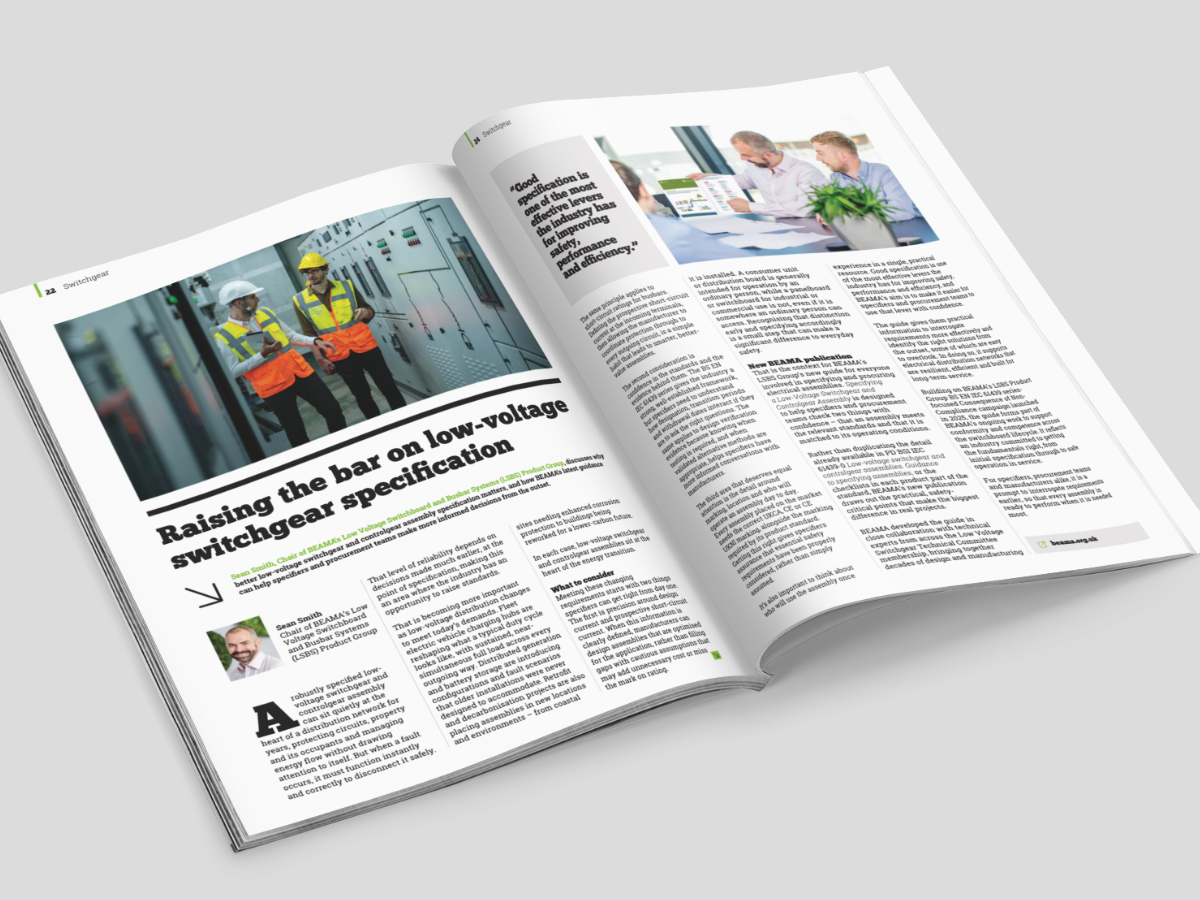
Managing Director Sean Smith has featured in the latest issue of Electrotechnical Review, discussing why robust low-voltage switchgear and controlgear assembly specification matters.
As Chair of BEAMA’s Low Voltage Switchboard and Busbar Systems Product Group, Sean explains how stronger specifications create electrical distribution systems that are safe and resilient for long-term service.
The feature draws on BEAMA’s Specifying a Low-Voltage Switchgear and Controlgear Assembly guide. Launched in July, MSSL contributed to the guidance through its work with the BEAMA Low Voltage Switchboard technical committee.
Clear understanding from outset
Good specification starts early. It identifies an assembly’s operating conditions, including design current and prospective short-circuit current at the incoming terminals.
This information allows manufacturers to design for the application and coordinate protection appropriately to avoid unnecessary cost or over-specification - supporting responsible design from outset.
Standards that support safe design
The article also highlights the importance of applicable standards, including the BS EN IEC 61439 series. Standards give specifiers the tools to understand the required designation, short-circuit requirements, relevant marking and the evidence needed to demonstrate compliance.
Through his work with BEAMA, Sean has consistently highlighted the importance of the BS EN IEC 61439 series in supporting safe, reliable low-voltage switchgear assemblies.
MSSL tests its low-voltage switchboards to BS EN IEC 61439-2 requirements, with safety considered throughout the design and manufacturing process. This commitment is supported by four ISO accreditations covering quality, people, health and safety, and environmental management.
Environmental factors
Location, environmental conditions, access and the people using an assembly also make a significant difference to safety and bespoke design.
Sean said: “Good specification is one of the most effective levers the industry has for improving safety, performance and efficiency.”
Earlier, better-informed conversations support safer and more effective power distribution throughout an assembly’s lifecycle.